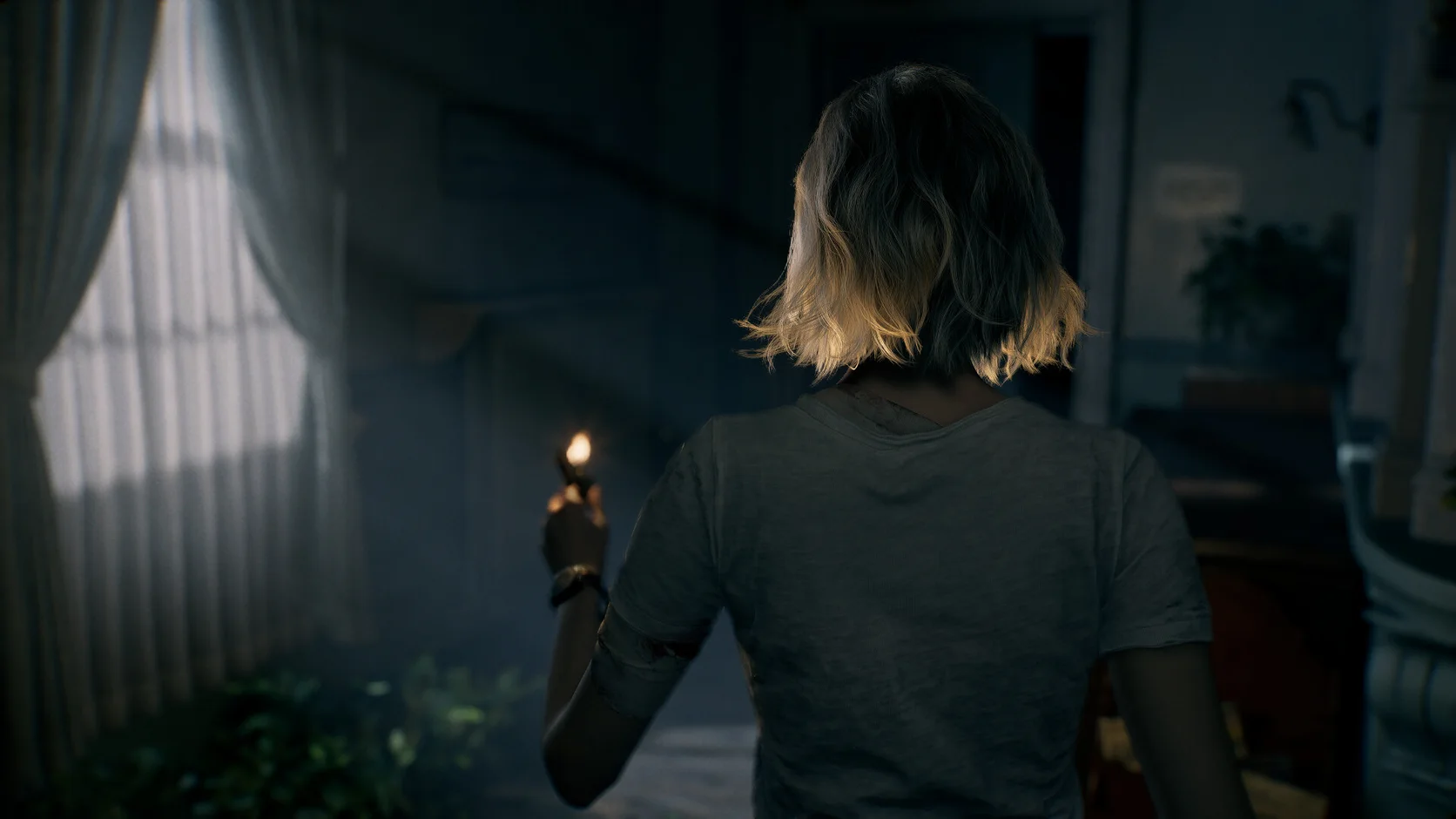
Detailed rooms add graphics load
Lighting, shadows, reflections, hair, and small objects can all appear in the same scene.
Resident Evil Requiem FPS boost and PC optimization
Dark rooms, detailed faces, and sharp lighting can push your PC hard. Hone cuts avoidable Windows load so your system has more room for Resident Evil Requiem.
Read recent reviews in the live Trustpilot feed.
01
One hall can mix deep shadows, bright lights, detailed hair, and close-up enemies. That can raise graphics load fast and make frame times jump.
Lighting, shadows, reflections, hair, and small objects can all appear in the same scene.
High textures and image quality can fill VRAM, especially at a higher resolution.
A sharper mode asks more from the GPU. A faster mode can help FPS but may soften the image.
Browsers, launchers, overlays, clips, and downloads can use CPU time, memory, or disk access.
02
Hone handles supported PC-side tuning. Then you can test the game options that have the biggest effect on your own hardware.
Reduce unneeded app work so more CPU time and memory stay free for the game.
Review gaming, power, and system changes that may help frame time and input response.
Test image quality, shadows, lighting, hair, and textures before dropping every setting.
Use a frame cap your PC can hold in heavy scenes. A steady result can feel better than a higher number that jumps.
03
Hone works through supported Windows settings. It stays outside Resident Evil Requiem and leaves live game code, memory, inputs, saves, and network traffic alone.
Hone does not inject into Resident Evil Requiem or read and change live game memory.
Hone does not add mods, change game files, edit saves, or unlock content.
Hone does not add aim tools, scripts, macros, bots, or features that play for you.
Hone does not hide software or try to get around game security tools.
04
Load one saved scene with lights, shadows, and movement. Test it before and after Hone so you can keep only the changes that help.
No fixed FPS promise. Results depend on your hardware, game build, drivers, heat, settings, and background apps.
Keep one graphics preset and camera view. Record one minute of FPS plus any visible dips or stutter.
Review each change, apply the ones you want, and restart if Hone asks you to.
Load the same save and follow the same path. Keep gains you can see and restore changes that do not help.
Start with image quality, shadows, lighting, hair, and textures. Change one group at a time, then test the same dark room. Keep textures clear if your graphics memory has room.
Close heavy apps, use a stable frame cap, lower costly graphics options, and keep drivers current. Hone can also reduce avoidable Windows-side load.
A new room may add lighting, shadows, enemies, and data from the SSD at once. Full VRAM or busy background apps can also make frame times uneven.
Use the target your PC can hold in demanding scenes. CAPCOM lists an upscaled 1080p 30 FPS target for minimum hardware and 60 FPS for recommended hardware. Both may dip under heavy load.
Yes, if native resolution is too heavy. CAPCOM uses upscaling in both official 1080p performance targets. Compare modes and keep the one that gives a clear image with steady frame times.
A patch may reset options or change shader work. Check your preset, restart the PC, and repeat the same test before making more changes.
Yes. The official minimum and recommended PC requirements both list 64-bit Windows 11.
CAPCOM lists Windows 11, 16 GB RAM, DirectX 12, an SSD, a Core i5-8500 or Ryzen 5 3500, and a GTX 1660 6GB or RX 5500 XT 8GB.
CAPCOM recommends Windows 11, 16 GB RAM, DirectX 12, an SSD, a Core i7-8700 or Ryzen 5 5500, and an RTX 2060 Super 8GB or RX 6600 8GB.
Hone works outside the game. It does not inject, edit live memory, automate input, change saves, or bypass anti-tamper tools. Hone is not made or approved by CAPCOM.
Yes. The free plan lets you try several PC optimizations before you upgrade.